
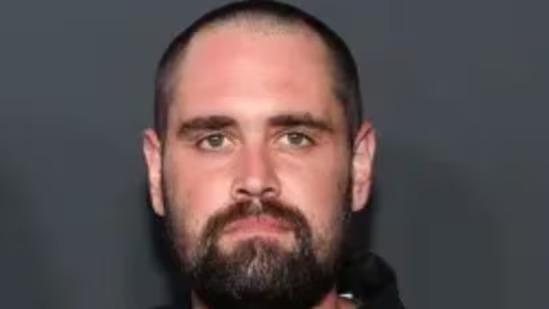
Nick Reiner, 32, has been charged with two counts of first-degree murder with special circumstances in the fatal stabbing of his parents, filmmaker Rob Reiner, 78, and his wife Michele Singer Reiner, 70, inside their Brentwood home.
Police were alerted by the Reiners’ daughter who discovered the bodies in the master bedroom. Nick Reiner is being held under special supervision due to suicide risk.
Nick and his father had argued at a holiday party given by Conan O’Brien the night before. Witnesses reported Nick appeared to be acting strangely. Nick Reiner, who had long struggled with addiction and mental health issues, had been living in a guesthouse on his parents’ property, and his mother had grown increasingly concerned about him in recent weeks.
Police quickly identified Nick Reiner as the primary suspect. Although Reiner lived in a guesthouse on the property, he was not there when officers arrived around 3:30 p.m., and prosecutors allege the killings occurred earlier that morning.
Detectives learned Reiner had checked into the Pierside Santa Monica hotel after 4 a.m. Sunday, but by the time police went there later in the day, he had already left. Authorities then relied heavily on digital geolocation, analyzing cellphone location data, electronic device footprints, app data, and surveillance cameras to track his movements across Los Angeles. He was ultimately located near Exposition Park by USC.
Surveillance video showed him lingering nervously for nearly an hour at an Arco gas station, purchasing a sports drink with cash shortly before his arrest.
Prosecutors allege Nick Reiner used a knife to commit the crime, but this “allegation” only adds a year to the sentence of murder. There were, however, multiple victims, making him eligible for either the death penalty or life in prison without parole (LWOP). It is highly unlikely for the D.A. to seek the death penalty, however, given the nature of Reiner’s mental state, and lack of any other “special circumstance” evidence, such as lying in wait, or murder for financial gain. Even life without the possibility of parole may be a difficult sell here to the jury.
Aside from his lengthy public history of drug addiction, documented in a movie made by his father about their struggles, Reiner reportedly suffered from mental illness. Over strong objection by the current Los Angeles D.A., Lyle and Erik Menendez’s sentences were recently commuted from LWOP to 25-to-life for the murder of their parents with no such history, and with evidence of murder for financial gain, and extensive premeditation. The Menedez defense had presented some evidence of sexual abuse, and there was strong pubic support from family. Similarly, two other children of the slain couple, Jake and Romy, have already signaled their compassion for Nick, stating that any speculation about the case “be tempered with compassion and humanity.”
It would not be unrealistic to expect Reiner’s attorney, Alan Jackson, not only to rely heavily on his mental history, and whatever drugs he may have ingested, but also on a creative interpretation of his relationship with his parents, to mitigate or even refute the prosecution’s evidence. This will be interesting considering how understanding and permissive the Reiners were with their son. Jackson will have his hands full creating a usable narrative out of this. And although Reiner’s mental state will likely be effective in the defense, it does not appear substantial enough to support NGI (not guilty by reason of insanity). But evidence of Nick’s relationship with his parents can be highly effective as defense attorney Jose Baez proved in winning an acquittal for Florida’s Casey Anthony for the murder of her daughter.